
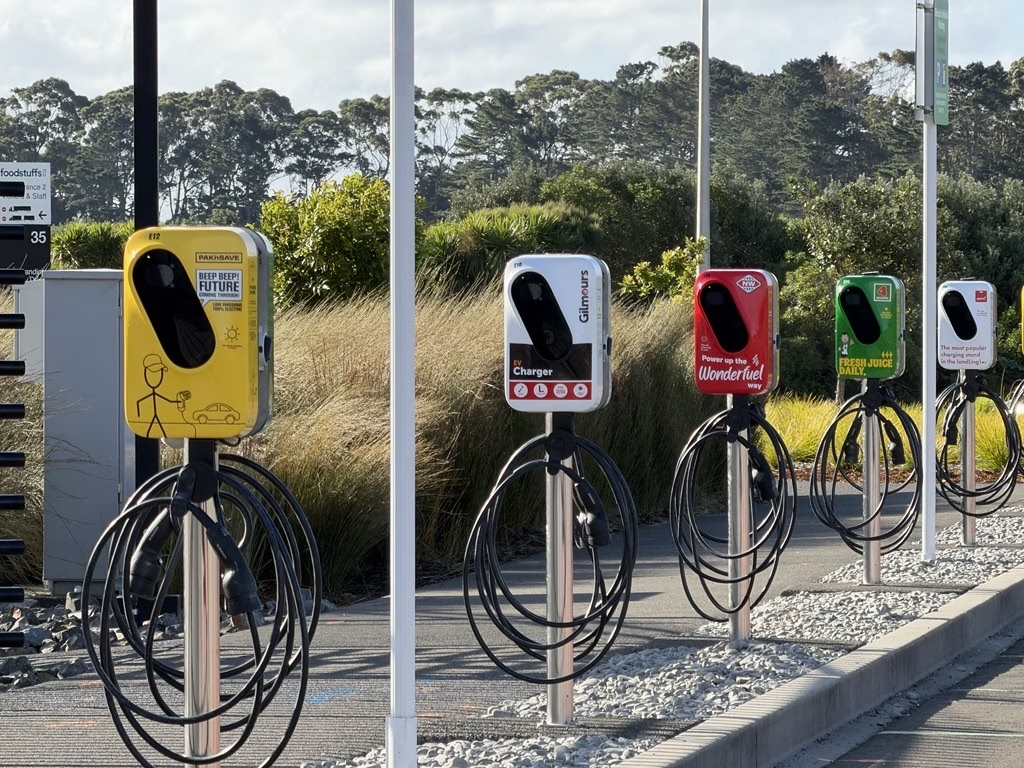
As petrol prices continue to rise, businesses are looking for practical ways to support employees facing rising transport costs.
While workplace EV charging was once viewed primarily as a sustainability initiative, it is increasingly becoming something else: a meaningful employee benefit.
For organisations looking to attract and retain talent,, and prepare for a more electric future, workplace charging is emerging as an investment that delivers value on multiple fronts.
Rising Transport Costs Are Changing the Conversation
When fuel prices increase, employees feel the impact immediately.
Commuting is one of the largest unavoidable expenses many workers face, particularly for those who travel long distances or work outside city centres. As cost-of-living pressures continue to influence workplace expectations, businesses are looking beyond traditional benefits to identify new ways of supporting their people.
Switching to an electric vehicle can significantly reduce employees transport costs, even more so if workplace charging is free or discounted for staff. Access to workplace charging removes a barrier to conversion and provides greater convenience during the working day.
This is helping shift workplace charging from a sustainability project to a practical business decision.
More Employees Are Driving Electric
EV adoption continues to grow across Australia and New Zealand, and with more people making the switch to electric vehicles, demand for charging infrastructure is increasing.
Many organisations are beginning to recognise that charging facilities may soon become as expected as bike storage, end-of-trip facilities, or staff parking.
The question is no longer whether employees will need charging access. The question is whether workplaces are prepared to provide it.
Workplace Charging Delivers More Than Sustainability Benefits
Reducing emissions remains an important driver for many organisations, but the benefits of workplace charging now extend much further.
Businesses are discovering that EV charging can help:
- Encourage the adoption of electric vehicles
- Support employee wellbeing by reducing transport costs
- Improve attraction and retention of skilled staff
- Demonstrate commitment to sustainability goals
- Future-proof workplace infrastructure
- Integrate with broader energy and fleet strategies
For many organisations, workplace charging sits at the intersection of people, energy, and transportation.
A Growing Trend Across Workplaces
Since installation the number of charging sessions per month has increased 12% and the monthly kWh delivered through the network has increased 13% as more staff transition to using EVs.
Projects like this demonstrate how organisations can combine employee benefits, operational requirements, and renewable energy into a single integrated solution.
Looking Beyond Individual Chargers
One of the biggest changes we’re seeing is how businesses think about charging infrastructure.
Rather than viewing EV chargers as standalone assets, organisations are increasingly considering:
- Fleet electrification
- Employee charging
- Electricity demand management
- Renewable energy generation
- Energy resilience
- Future infrastructure requirements
By taking a more strategic approach, businesses can ensure investments made today continue to deliver value as transport and energy systems evolve.
Building Flexibility for the Future
No one can predict exactly where fuel prices will be in five years’ time. What is clear is that the transport sector is becoming increasingly electrified.
Organisations that invest in charging infrastructure today are creating greater flexibility for tomorrow. They are better positioned to support employees, electrify fleets, manage energy demand, and respond to changing market conditions.
Workplace charging is no longer just about powering vehicles. It’s about supporting people, strengthening business resilience, and creating workplaces that are ready for the future.
How Thundergrid Helps
Thundergrid works with organisations across Australia and New Zealand to design, deploy, and manage smart energy and EV charging solutions for workplaces, fleets, and commercial sites.
From employee charging programmes and fleet electrification through to solar integration and energy management, we help businesses build the infrastructure needed for the transition to electric transport.
Interested in exploring workplace charging for your organisation? Contact the Thundergrid team to discuss how smart charging infrastructure can support your employees, your fleet, and your long-term energy strategy.